
Radiation therapy is one of the most common treatments for cancer. If your treatment plan includes radiation therapy, knowing how it works and what to expect can often help you prepare for treatment and make informed decisions about your care.
Radiation destroys or injures rapidly dividing cells, primarily cancerous cells. It works by making small breaks in the DNA inside cells. These breaks keep cancer cells from growing and dividing and cause them to die.
It is important to understand that normal tissues located in the radiation path will be affected along with the tumor cells that are targeted. The essence of the treatment plan is to limit the amount of radiation that the normal tissues receive and to maximize the dose to the cancer cells.
There are many forms of radiation each bringing specific benefits and in some cases; treatment may involve combining these forms of radiation. Types of radiation depend on the several factors such as the tumor location, staging, grade and more.
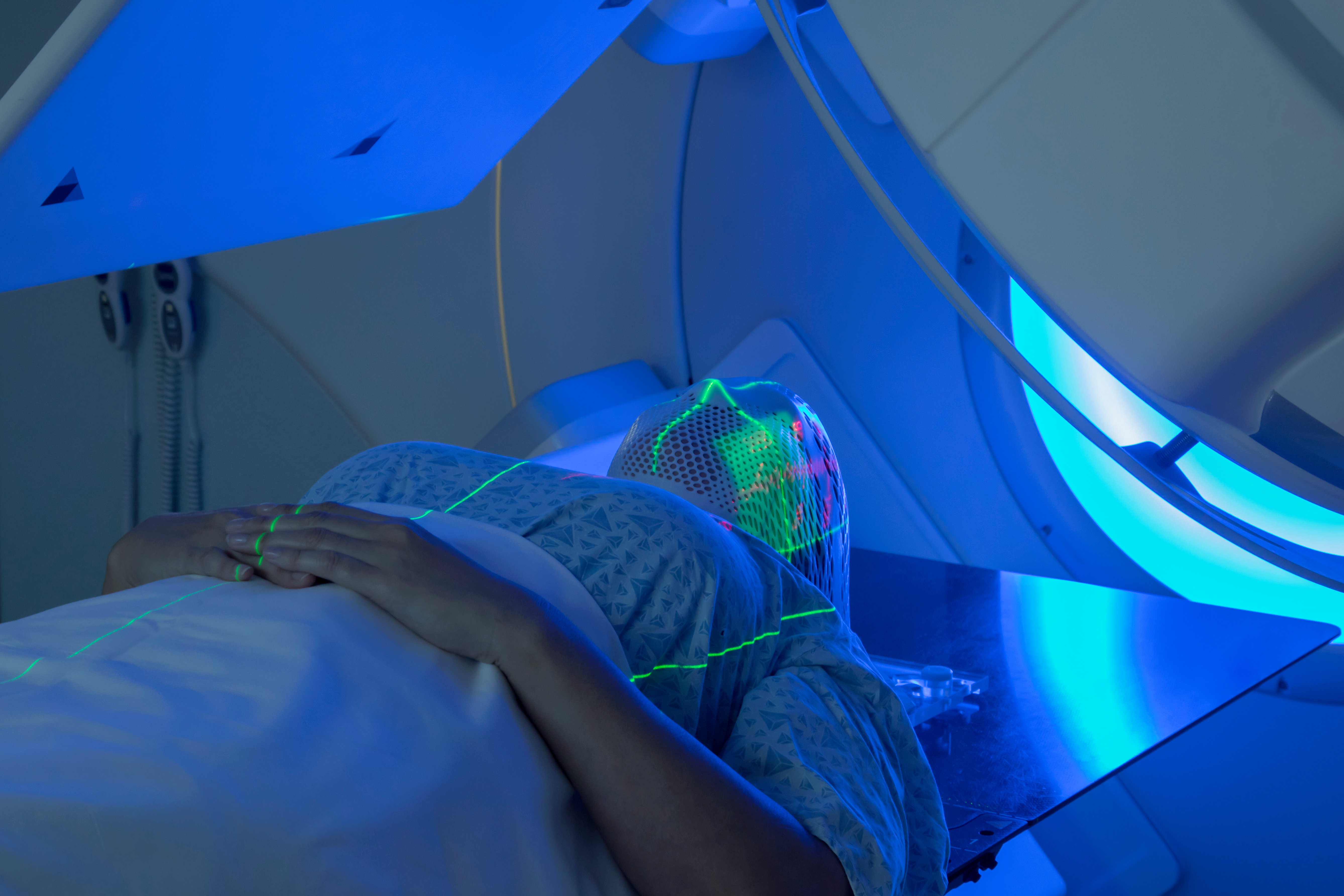
Radiation Therapy may be used for the following reasons:
- After surgery, also called adjuvant radiation, to kill any cancer cells that might have been left behind to help lower the chances of a local recurrence. For ACC, standard therapy normally involves surgical removal of the tumor with follow up radiation. This is especially true due to the high probability of perineural invasion and the difficulty in achieving clean surgical margins.
- As the main treatment for tumors that can’t be removed by surgery because of the size, location of the tumor.
- As the main treatment if a person can’t have (or doesn’t want) surgery
- To treat cancer that has recurred in an area that has been previously treated with radiation; sometimes called irradiation. It may be possible to give more radiation in the same place depending on the amount of radiation that was used before.
- To treat distant metastasis (or cancer spread) in other areas of the body such as the lungs, liver, brain and bones. Also, to help with symptoms, such as pain. This might be referred to palliative radiation or treatment.
Types of Radiation
External Beam Radiation
External beam radiation (EBT), also known as external radiation is the most common type of radiation therapy used for head and neck cancer. It is used to aim high-energy rays or particles from outside the body into the tumor, thus passing through healthy tissue to varying degrees.
The goal of radiation is to optimize the dose to the cancer and the immediate surrounding tissues and to minimize the amount of radiation delivered to normal tissues that are in the direct path of the beam (photons, protons, neutrons, carbon-ions).
Internal Radiation
Internal Radiation, also known as brachytherapy, has been used to treat ACC metastasis (or spread) in other parts of the body. In rare cases, it has also been used if surgery or external beam radiation is no longer an option if the cancer has come back.
It uses an implant that seals a radioactive source. The radioactive implant is put inside the body in or near the tumor. Different types of implants may be called pellets, seeds, needles, capsules, balloons, or tubes. One or more implants is put into the tumor or body cavity with an applicator, usually a metal tube or a plastic tube called a catheter. Imaging tests (an x-ray, ultrasound, MRI, or CT scan) are usually used during the procedure to find the exact place the implant needs to go. This way radiation harms as few normal cells as possible. If an implant is permanent, the radiation fades over time and won’t give off any more radiation. In most cases, the procedure is an out-patient procedure.
Aside from radiation (internal or external) or surgery, patients are also exploring alternative treatments for metastasis. Some of these treatments are less-invasive; often can be repeated and are often considered palliative treatment.